The most effective job searches are strategic, organized, and focused, and the Fleishman Career Center is here to help. Whether you’re exploring career options, developing targeted application materials, preparing for interviews, or negotiating an offer, you’ll find resources and support to help you navigate every stage of the job search process. Additionally, at any point in the process, you can schedule an appointment with one of our career consultants for personalized guidance and support on your unique search.
Knowing What You’re Searching For
Sometimes, knowing what to actually put into the search bar of a job board can be one of the biggest hurdles to getting started with your search. Here are just a couple of resources to help identify the keywords and job titles that align with your interests and skills.
O*NET Online
Learn about different careers, find related job titles, and identify keywords that can help you search for opportunities more effectively.
Mentor Match & LinkedIn
Search Binghamton University alumni by industry, employer, or career field using Mentor Match to explore career paths, ask about common job titles, and gain insight into roles that match your interests. Then, expand your search with LinkedIn to discover additional alumni, explore employers, and identify common job titles in your field.
Student Outcomes Tool
Discover common job titles, employers, and industries of recent Binghamton University graduates to help guide your job search.
Steppingblocks
Explore career paths and research career outcomes using real education and workforce data. This tool will display the career paths of Binghamton University graduates as well as broader workforce trends beyond the university.
In addition to gaining clarity on the job titles that align with your interests, it’s important to reflect on your work preferences before searching for opportunities to ensure you’re focusing your time and energy on roles that align with your goals. These preferences vary by job seeker, but key factors to consider include geographic location, desired salary, benefits, job function, responsibilities, and company culture. We encourage you to reflect on these factors and write down your preferences, including a list of “must-haves” and “nice-to-haves,” so you can more effectively evaluate opportunities.
Knowing Where to Search

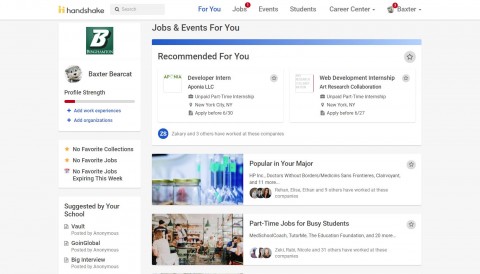
Knowing where to search for opportunities isn’t one-size-fits-all, and many times the most effective search is a diverse one that incorporates many strategies like job boards, recruitment events, and informational interviewing. When it comes to job boards, hireBING by Handshake is a great place to start because opportunities are geared toward current students and recent graduates. Beyond that, LinkedIn has a robust job search platform, and you can also utilize our curated list of industry-specific resources. Be sure to keep a close eye on upcoming events, as any opportunity to connect with an employer or alumnus can be valuable in your search.
Remember to keep your job search organized. Early on in the process, create a spreadsheet that allows you to easily track information related to the roles you are applying to, including the position/company, link to the job description, date applied, scheduled interviews if applicable, and a notes column for updates. Prefer to have a pre-set template or additional guidance? There are many free resources to help keep your search organized.
Submitting Applications, Interviewing, & Negotiating
Application Materials
Application materials, such as a resume and cover letter, should be tailored to the position/industry and effectively communicate how your skills and experience align with the role.
Preparing for Interviews
Research and practice are key to feeling confident and prepared for interviews. From learning more about the company and interviewers to practicing commonly asked questions, strong interview preparation helps you clearly communicate your skills and fit for the role.
Negotiating Job Offers
Negotiating your salary can feel intimidating, but it is a normal and expected part of the job search process. Salary is also not the only negotiable aspect of an offer; benefits, flexibility, and bonuses or incentives are also worth considering as you research and assess your value.